Unmasking Your Neurodivergence in Midlife
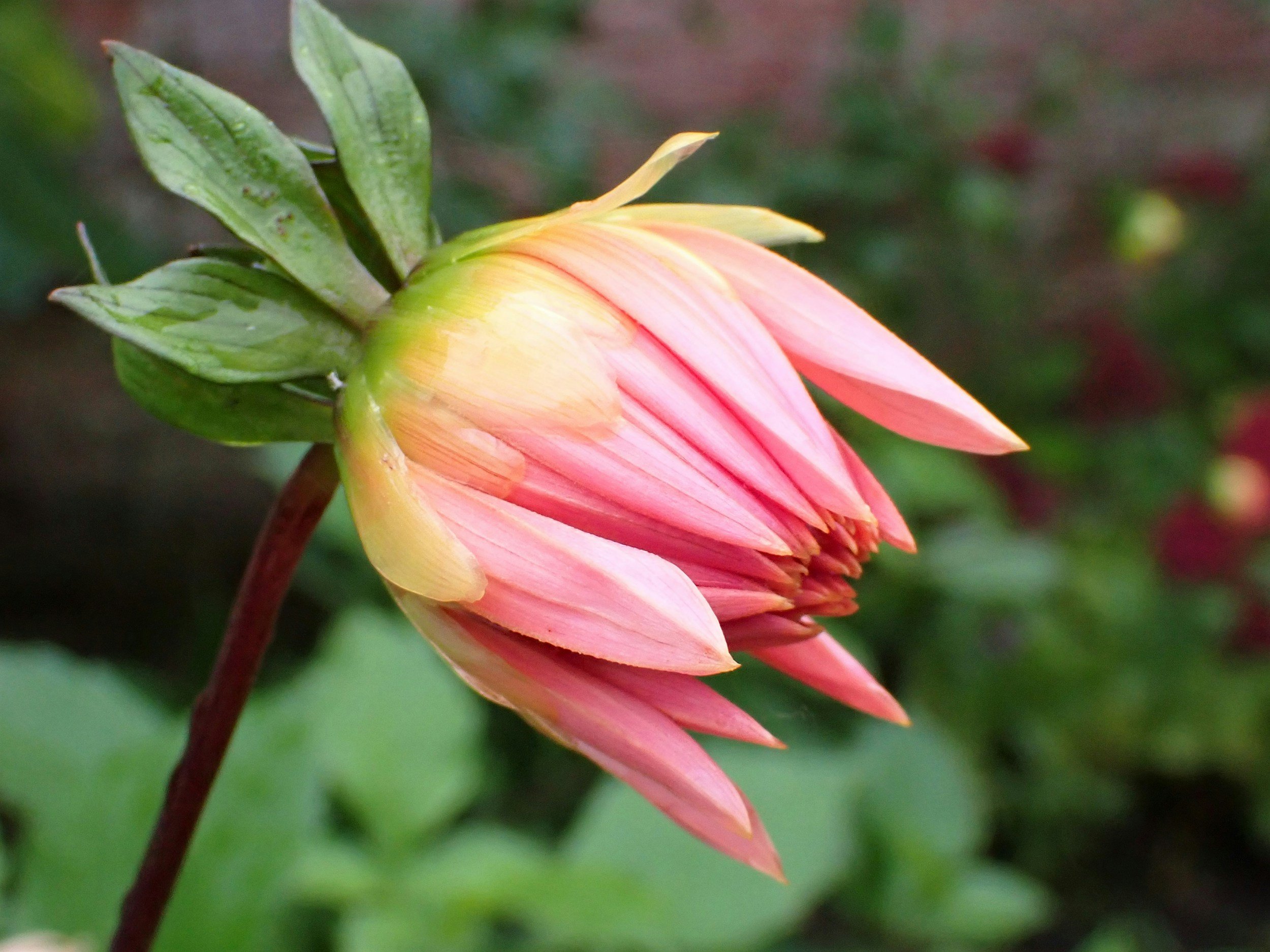
"And the day came when the risk to remain tight in a bud was more painful than the risk it took to blossom." — Anaïs Nin
You’re so tired.
Not the kind of tired that a good night's sleep fixes. This is a bone-deep exhaustion that has been accumulating for decades — the tiredness of a woman who has spent her whole life working twice as hard to appear half as effortful as everyone around her. The tiredness of someone who has been performing a version of herself that was never quite true.
Maybe you've just received a diagnosis — ADHD, autism, both — and the world has cracked open in a way that is equal parts relief and grief. Or maybe you haven't been diagnosed yet, but something is unraveling. Your body is changing. Perimenopause has arrived, uninvited and unruly, and suddenly the coping strategies that held everything together for thirty years are simply not working anymore. The mask is slipping, and you cannot figure out how to hold it in place, or how it got there in the first place.
The Mask You Never Knew You Were Wearing
For most neurodivergent women, masking isn't a conscious choice. It's a survival strategy built in childhood, refined through adolescence, and perfected by the time you reach adulthood — so seamlessly woven that it becomes invisible even to you.
It looks like apologizing before you've done anything wrong. Arriving at every meeting over-prepared because you're terrified of being exposed as someone who thinks differently, or who doesn’t think enough, or who thinks too much but has nothing to show for it. Performing neurotypical productivity (hello, tidy desk and 9-5 work rhythm) while your nervous system screams in the background. Giving and giving to others while never quite understanding why you need so much more recovery time than everyone else seems to.
And it works, until it doesn't.
Until a hormonal shift, a burnout crisis, a loss, or simply the accumulation of years brings you to your knees in a way you cannot organize, manage, or smile your way through.
Raise your hand if you’ve been there - or maybe are there now. You can’t see it, but my hand is raised super high, fingers wriggling while I squirm in my chair.
“Right there with ya, sister!”
The Question That Arrives With the Diagnosis
For many women, neurodivergent unmasking burnout doesn't arrive alone. It brings a companion: an identity crisis that can be more disorienting than the burnout itself.
If you've recently received a late diagnosis, you may be sitting with a question that feels almost too big to hold. Who am I, if I'm not who I thought I was?
Decades of masking created a survival persona — a carefully constructed version of yourself that learned to pass, to perform, to meet the world on its terms. That persona worked. It protected you. But maintaining it costs more than you have to give.
The grief here is genuine. You may find yourself mourning the woman you thought you were while simultaneously not yet knowing who lives underneath all of that. You may look back at decades of striving and perfectionism, of suffering in environments that were never designed for your nervous system, of the internalized belief that you were somehow fundamentally wrong, and feel a rage and a sadness that have no clean edges.
This is part of unmasking in midlife. The liberation and the grief arrive together.
The authentic self underneath the survival persona is not lost. She has been there the whole time, waiting in the quiet underneath the performance. The work of this season is to excavate — gently, with great tenderness — the self who was always there.
The Cocoon and the Dissolution
There is a moment in the life of a caterpillar that doesn't get talked about enough (IMO). Inside the chrysalis, the caterpillar doesn't simply grow wings. It dissolves. It becomes, for a time, essentially formless before reorganizing into something capable of flight.
Autistic unmasking burnout, and the burnout that arrives for neurodivergent women of all kinds in midlife, works like this. When the strategies you've relied on stop working, when the diagnosis arrives and reframes your entire history, when your body begins demanding a different relationship with rest, stimulation, and care, you may find yourself in that dissolved space, uncertain of your own shape. This is a transformation in process, even when it feels like a collapse.
You’re not meant to navigate this season alone. Therapy, community, and the support of people who understand neurodivergent experience are the container that holds you while you reorganize. The chrysalis doesn't dissolve in open air. It has a structure around it. You deserve that structure too.
Turning Back Toward What Delighted You
The writer Sharon Blackie, in her book Hagitude, argues that midlife isn't a decline, it's a threshold. Drawing on the figures of wise, fierce, creative elder women in European myth and folklore, she makes the case that the years from menopause onward can be the most dynamic of a woman's life: a time to finally claim the desires and identities that got set aside in earlier decades, to shed the roles assigned to us, and to move into a post-heroic chapter defined by deep creativity and unapologetic self-expression. Blackie describes it as a psychospiritual journey, a becoming more fully oneself rather than a slow retreat from life.
For neurodivergent women, that idea of reclaiming what got crowded out hits differently. Because what we set aside wasn't just desire in the abstract. Often, it was the very way we were wired to love things.
Most of us had special interests as children — deep, consuming, luminous passions — that got teased or shamed out of us by peers who didn't understand intensity, who found our particular way of loving things strange or embarrassing.
Maybe you were the girl who knew everything about horses, or read obsessively about a particular era of history, or spent hours creating elaborate imaginary worlds.
I was a girl who moved through a dance studio like it was the only place I fully existed. I remember one particular rehearsal when I was so swept up in the feeling of moving to Enigma’s Dance of the Dolphin, wearing my periwinkle chiffon leotard and skirt, that I could not dance without my eyes closed. Ballet was my early language, the truest form of self-expression I knew at the time, until my peers made it clear that it wasn't safe to love it so openly.
I packed that intensity away, along with other parts of myself that didn't seem to fit. For years, I absorbed the message that my way of loving things was too much. And so I learned, as so many of us do, to love things quietly and privately. To (try to) be interested in the things the other girls were interested in, at the level of interest they were comfortable with. Like you, I learned to hide that aliveness, to need less, and take up less space.
What I'm learning now, in midlife, is that those interests don't die.
They wait.
While I am not returning to ballet, I am returning to fiber arts, in particular sewing and hand crafts like knitting — the activities I spent hours upon hours engaged with in my room most days after school (when I wasn’t dancing) and on the weekends — with a devotion that feels less like a hobby and more like a homecoming.
I'm planning a natural dye garden, learning to coax color from plants, to touch materials that connect me to the earth and to the long chain of women who worked with fiber before me. At night, I sleep underneath two quilts handsewn by women from both sides of my family. During the day, when I make time, I am stitching on a hand-sewn quilt for my son. When my hands are working with thread or plant material, something in my nervous system settles. I am grounded in my body in a way that nothing else quite replicates.
This is one of the most powerful antidotes I know to the identity fragmentation that comes with a late diagnosis and/or midlife transitions. That is returning to the things that delighted you before you learned to mask. Those old interests carry a direct line back to your authentic self, the one who existed before the survival persona was constructed. They are not trivial. They are medicine.
What did you love before you learned to be ashamed of how much you loved it? What interests did you bury because they made you too visible, too intense, too much?
Midlife is asking you to go back and find them.
The Internal Work of Unmasking in Midlife
Before anything changes on the outside, something has to shift on the inside, just like in the cocoon. Unmasking in midlife begins with the radical, tender act of noticing.
Noticing the places where you are performing rather than inhabiting. Noticing what your body feels like when you're masking. Perhaps a held breath, tight shoulders, upset stomach, or the sense of watching yourself from slightly outside yourself? Noticing the difference between genuine calm and the functional freeze.
This internal work is slow. It cannot be rushed or optimized, which will feel particularly excruciating if perfectionism has been one of your primary survival strategies. It asks you to develop a new relationship with your own nervous system - to learn its signals, honor its limits, and stop overriding its wisdom with willpower.
It also asks you to begin questioning the internalized beliefs that have been running quietly in the background for most of your life.
The belief that struggle is proof of worth. The belief that needing accommodations is a weakness. The belief that if you just tried harder, organized better, and wanted it more, you could be like everyone else. These beliefs are the residue of a world that wasn't built for you.
One practice I return to again and again is what I call The Pause Practice. Before responding, before deciding, before performing — pause. Breathe. Ask your body what it knows. This is not about being slow or indecisive. It is about creating enough space between stimulus and response that your actual self can show up, rather than the automated mask.
Moving Outward: The External Work
As the internal work deepens, external shifts become possible and sometimes necessary.
This might look like changing how you communicate your needs. It might look like restructuring your work to match your actual rhythms rather than the rhythms of a neurotypical world. It might look like telling your closest people something true about yourself that you've been hiding. It might look like letting the perfectionism loosen, just slightly, and noticing that the world does not end.
It might also look like rest. Radical, unapologetic, countercultural rest.
Courage in this season doesn't always look like bold action. Sometimes the most courageous thing a woman can do is stop. Neurodivergent unmasking burnout doesn't resolve through more effort. It resolves through actual restoration.
The world will tell you this is selfish.
The world is wrong.
You’re Right On Time
Wherever you are in this — newly diagnosed and reeling, deep in burnout, just beginning to wonder, or somewhere in the middle of your own dissolution — I want you to know that this unraveling is not the end of something. It is the beginning.
The risk to remain tight in a bud becomes, at a certain point, unbearable. The body knows. The soul knows. Something in you has been pressing against the edges of the life you've been performing for a very long time.
Underneath the survival persona, the perfectionism, the people-pleasing, the performed productivity, the internalized belief that you were fundamentally wrong, there is a woman who has been waiting. Patient as a seed in winter.
The question isn't whether you're too late. The question is: what have you been waiting to become?
I’m not asking rhetorically. I’m suggesting you now grab your journal or open a blank document and write to this prompt: "If you were a seed, what would you be?"
Let yourself write without editing. What emerges about the kind of nourishment you need, the conditions in which you grow, the season you're currently in — this can be unexpectedly profound. Seeds know what they need. They don't apologize for their requirements. They don't perform dormancy when they're ready to grow; they also don’t rush to sprout and bloom until the conditions are right.
Let your seed self tell you what she needs.
xo,
Maggie
If you find yourself wanting to go deeper with this — to actually learn how to listen to what your body is telling you, and to use writing as a way to navigate decisions and change rather than spinning in your head about them — that's exactly what I teach in Decision-Making for Neurospicy Women. It's a short three-video series that you can work through at your own pace. We cover The Pause Practice in full, how to use writing when you're at a crossroads, and how to start trusting yourself again when decades of masking have made that feel nearly impossible.
If the seed prompt stirred something in you, I'd love to have you join The Writing Cocoon — a weekly online writing sanctuary for neurodivergent women. Writing is one of the most powerful ways I know to begin unmasking: slowly, safely, in community. You can learn more [here].