My son has been finishing his last year of high school, today being his last official day of classes.
Needless to say, these last several months have been full of reflection.
Up until a few years ago, I would have filled my schedule right up to the edges, satisfied to see my calendar full of events to look forward to. I said yes to everything, double-booked myself, then apologized when I had to cancel, rush, or show up frazzled and half-present.
When my son was little, elementary-school-age, he had a lot of energy and curiosity and didn’t want to stay home or sit still, but I was busy and exhausted. I’d suggest we go to the butterfly museum and wander the damp paths through the humid conservatory. More often than I like to admit, though, I’d plan outings for us that I'd later cancel because I was so tired. It happened regularly, and I felt terrible about it. I couldn’t figure out why I didn’t have the capacity to keep up with this curious kid and why I kept disappointing him.
I don’t know if I got better at following through or suggesting less so as not to cancel later, or if, as he grew older, his interests changed and our energies aligned more closely.
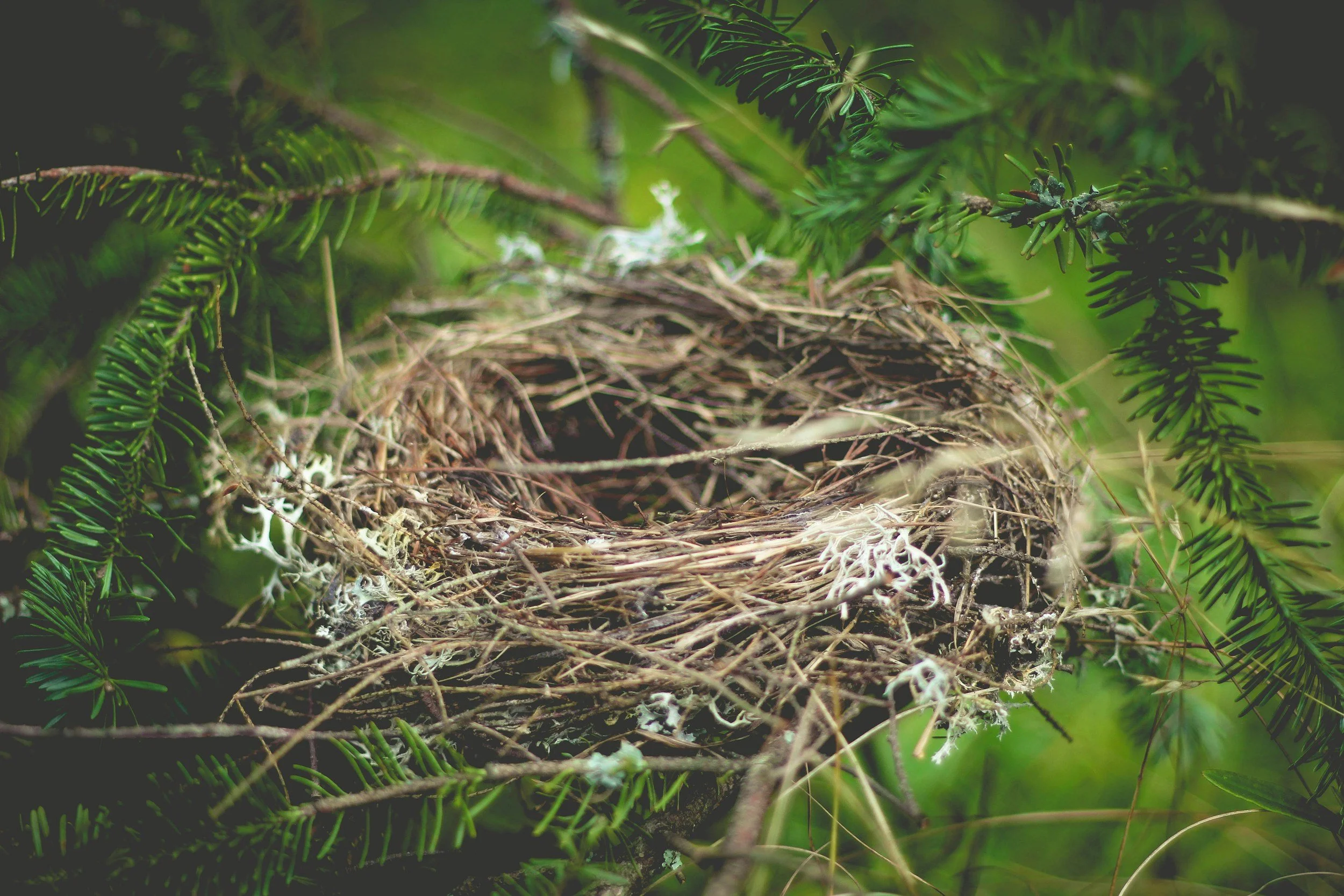
This year is significantly different. I've been saying no.
Not to dramatic things. Just to the small commitments that pile up and leave no room for what matters. I've wanted to be available for him through this transition, even though there's nothing specific to plan for, just space for whatever he needs in the moment. Often it's just conversation.
I used to apologize for this kind of thing. For keeping my schedule open without a "good reason." For saying no to opportunities that seemed important, for choosing presence over productivity or connection.
I don't apologize anymore.
Something shifted when I got my ADHD diagnosis a few years ago. I started bringing compassion to myself and my ways of being in the world, rather than judgment. I stopped trying to force myself into shapes that didn't fit.
But this empty nest transition is different. It's not just about accommodating my neurodivergent brain or managing my energy. It's about my entire identity as a mother dissolving into something I can't see yet.
And it turns out that's exactly what's supposed to happen.
The Cocoon Has Always Been There
I've been fascinated by cocoons my whole life.
When I was a kid, my bedroom was my cocoon. A place for creativity and quiet, away from everything that felt too loud or too much.
Later, when I worked as a wedding dress designer and seamstress, the silk moth became my mascot. I thought of the wedding dress as a cocoon for transformation—from maiden into matron. I held the concept that a profound psychological change happens when a woman gets married, and the dress witnesses, protects, and facilitates that transformation.
When I started writing regularly and eventually created a writing group, The Writing Cocoon came naturally. A weekly space to enter something quiet and generative, protected from the world's demands.
And when perimenopause started unmasking my ADHD, the cocoon became even more essential. All of this allowed me to take my self-care seriously, knowing I had a differently wired brain. The fact that I'd always used art-making to process my emotional life finally made sense. The fact that I knit in order to pay attention finally made sense.
The cocoon isn't just a metaphor. It's been the organizing principle of my life.
But here's what I'm learning now. The cocoon isn't just a creative retreat or a self-care practice. Sometimes it's the place where your entire identity dissolves so something new can form, just as the caterpillar turns to goo before any shape of a butterfly can even be imagined.
When the Apologies Started
Before my ADHD diagnosis, I apologized a lot.
I apologized for my (slower) pace. For needing more time than other people to process information or complete tasks; for losing track of conversations or forgetting what I'd agreed to; and for being late, for being early, for taking up space with my questions or my feelings.
I apologized for my needs. For needing alone time to recharge, for needing downtime that looked like "doing nothing”, for needing things explained differently or structured differently, or for not being able to just push through like everyone else seemed to.
I apologized for my confusion. For not understanding something immediately, for needing to ask again, and for getting overwhelmed by multi-step processes that seemed simple to everyone else.
And I apologized for apologizing.
I see this pattern in almost every woman I work with. We've learned that our natural rhythms are somehow wrong, that needing what we need is an imposition. We’ve been shaped to believe that our confusion or slowness or sensitivity is a personal failing rather than just how our nervous systems work.
For neurodivergent women, this is intensified. ADHD brains work on different timelines, need different structures, and process information differently. But we've spent our lives trying to function like neurotypical people, then apologizing when we can't quite pull it off.
We apologize for existing in bodies and minds that don't fit the template we were given.
When the Scaffolding Comes Down
There's a layer to this that I rarely see named, and it matters especially if your brain is wired the way mine is.
For a lot of us who were diagnosed late, motherhood was not only a relationship and a responsibility, it was also a structure. An ADHD brain often runs on external scaffolding, the routines and deadlines and other people's needs that hold our days in shape and quietly do some of our executive function for us. A child supplies that constantly. There's a pickup time, a dinner to make, a permission slip due tomorrow, a small person whose needs are urgent and concrete and impossible to forget. For years, that scaffolding has been organizing me from the outside.
When the child leaves (which he will soon), the scaffolding comes down. And it isn't only the relationship I'll be grieving. It's the structure that was regulating a nervous system that has never been good at regulating itself.
It's worth saying that transitions are difficult for ADHD brains at the smallest scale. Moving from one task to the next can feel like wading through wet sand. So it shouldn't surprise me that a transition this large, holding the old life and the unformed one at the same time, is undoing me in a way I don't have clear words for. Witnessing change has never been easy for me, and now I can see why. It's how my wiring meets ambiguity, the same friction I feel between two tasks, scaled up to two lives.
And for many of us, this arrives at an already neurochemically tedious time. Perimenopause pulls estrogen down, and estrogen is part of how our brains manage dopamine. So the very years our children are leaving are often the years our ADHD gets louder, our old coping strategies stop working, and the mask we spent decades building begins to slip.
You're losing structure, chemistry, and role at the same time! That's a lot of cocoon time at once.
What Cocoon Time Actually Requires
Here's what I'm learning about this phase.
Cocoon time is the necessary dissolution that comes before transformation.
In the cocoon, the caterpillar doesn't just grow wings. Its entire body dissolves into something called imaginal cells, an unformed liquid. It’s nothing that makes sense yet.
That's what a midlife identity crisis actually is. Not a crisis but a chrysalis.
Midlife chrysalis.
The mother identity that organized your entire life for eighteen years dissolves. The professional identity that made sense in your thirties stops fitting. The partner identity, the daughter identity, the "capable one" identity—they all start to feel like costumes.
And when you're in that liquefied state, you can't rush it. You can't force the new form to emerge before it's ready, and you can't apologize your way into faster transformation.
Cocoon time requires permission to not know who you're becoming yet.
Permission to keep your schedule open for ambiguous availability instead of concrete accomplishments.
Permission to say no to things that would've seemed important before, because you're doing the invisible work of becoming.
Permission to need more rest, more quiet, more space than feels reasonable or defensible.
Permission to stop performing the old identity even when you don't have a new one ready yet.
Notice What You're Apologizing For
This week, pay attention to your apologies.
Not the genuine ones, where you've actually hurt someone or need to make amends. Those are important.
I'm talking about the reflexive apologies. The ones that come before you've even said what you need.
Notice when you apologize for your pace. For needing more time, for working differently, for not keeping up with someone else's timeline.
Notice when you apologize for your needs. For needing alone time, for needing things explained differently, for needing to say no.
Notice when you apologize for your confusion. For not understanding immediately, for asking questions, for being in a process that isn't linear.
Just notice.
Just observe how often you're saying sorry for being exactly who you are.
What if you didn't have to apologize anymore?
What if the things you're apologizing for aren't problems to be solved but simply the truth of how you move through the world?
You Don't Need Permission, But I'm Offering It Anyway
If you're in your 40s and feeling like everything you built has stopped fitting, you might just be entering a cocoon time.
You can’t rush the process, you don't have to know what's next, and you don’t need to apologize for any of it.
If this resonates and you'd like support navigating cocoon time, I offer free consultation calls for individual therapy. Sometimes the most important thing is having someone witness your process without needing you to speed it up or figure it out faster than you're ready.
You can schedule a call here