Redefining Productivity for ADHD Women in Mid-Life
"Why can't you just save it up?" my brother once asked, referencing my enduring need for solitude.
At the time, I lacked the vocabulary to explain why I needed vast stretches of alone time. I didn't yet understand introversion, emotional regulation, or what it meant to be a highly sensitive person. But I knew, deep in my bones, that without this time, interactions with others and the wider world felt daunting and overwhelming.
As I've aged, my understanding of myself has deepened, and I've realized the quality of solitude I crave has evolved. There's the kind of alone time easily satisfied with Netflix binges or a walk while listening to true crime podcasts—surface-level solitude that scratches an itch but doesn't truly nourish.
But increasingly, I found myself yearning for something different: unstructured solitude. Time where ideas could meander without agenda, where I wasn't producing or consuming or even particularly doing anything. Time that led me to deeper insight not through force but through spaciousness.
The Productivity Trap We're All Swimming In
Beneath the surface of this personal need lies a pervasive societal expectation: constant productivity and efficiency. This linear approach—move from A to B to C, produce measurable results, justify your time—feels particularly unattainable for neurodivergent individuals, especially women.
We're conditioned to prioritize product over process.
There's a "right" way to work, a "right" way to create, a "right" way to spend our time. This restrictive mindset leaves little room for creative, process-oriented paths that deviate from the norm—yet these wandering paths are often where the real magic happens.
Neurotypical productivity standards overlook an essential fact: many of us need time to process and organize our thoughts.
We work in ebbs and flows rather than predictable straight lines. We need what looks like "doing nothing" in order to do anything meaningful at all.
Understanding this systemic pressure—recognizing it's not personal failure but cultural conditioning rooted in toxic capitalism—allows us to begin redefining what productivity actually looks like and reclaim our own narrative.
When Your Body Says "No More"
My realization came during a particularly brutal period of burnout. What I initially thought were depressive episodes, I later recognized as ADHD burnout—that specific collapse that happens when you've been overriding your neurodivergent needs for too long.
I realized my efforts to conform to traditional expectations of success weren't just stifling; they were making me unwell.
Creativity became my salvation. Writing emerged as a practice through which I could anchor myself, finding calm amid stress and overwhelm. With each word, I found a bit of clarity, a bit of ground beneath my feet.
The reframe was gentle yet profound. Productivity can be about allowing ideas to simmer quietly, letting creativity steer the wheel, trusting that the seemingly unproductive time is actually the most generative time of all.
What Happens When You Stop Fighting Your Nature
This shift in perspective changed everything. Understanding that downtime is a vital piece of the creative process rather than a luxury meant I could stop pushing against my natural inclinations. I stopped berating myself for needing so much space, so much quiet, so much time to simply be. I began to honor these needs.
I started allowing time for the generative solitude my spirit needed without apology.
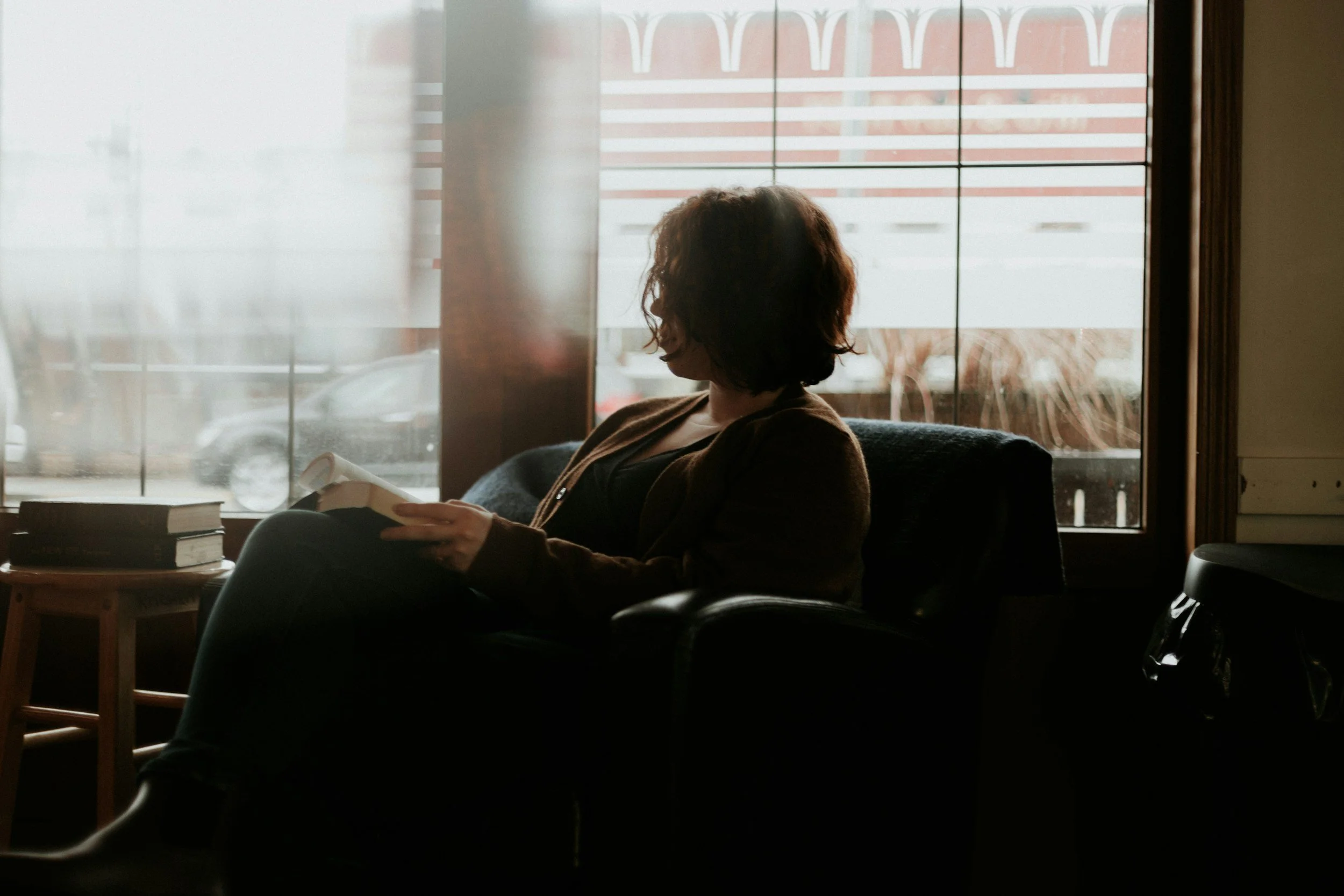
This unstructured time took many forms. Staring contemplatively out the window, diving into books that sparked curiosity, having spontaneous, meaningful conversations, knitting while my mind wandered, writing without destination. These moments, seemingly unproductive by conventional standards, became the catalysts for deep wisdom and creativity to emerge.
The ideas that came during these times were richer, more authentic, more interesting than anything I could force during scheduled "creative time." The insights that surfaced while I was supposedly doing nothing were the ones that actually mattered.
Tuning Into Your Body's Wisdom
If you're seeking a similar shift, start by paying attention to your body's responses to the world around you. When demands arise, notice what sensations surface. Does your chest tighten? Does your breathing get shallow? Do you feel a wave of exhaustion or a subtle pull to retreat?
These are information.
Begin tracking these observations. Not obsessively, not as another productivity task, but gently, with curiosity. Let them guide your understanding of your own needs. You're gathering data about your actual capacity and rhythms, not the capacity you think you "should" have.
Incorporate a small creative practice into your daily life. Something purely for you, with no expectation of product or performance. This might be knitting, writing for five minutes without agenda, drawing, piecing together a puzzle, playing music. These activities act as anchors to the part of yourself that thrives beyond toxic expectations. They create little pockets of spaciousness in an otherwise demanding world.
The Radical Act of Honoring Your Rhythms
Embracing these practices marks the beginning of a journey toward nurturing yourself amid a world that demands endless productivity. Genuine productivity, the kind that actually sustains you, comes from aligning with your internal rhythms rather than overriding them.
For neurodivergent women, this is particularly crucial. We've often spent decades trying to function like everyone else, compensating, masking, pushing through. That approach has a shelf life, and for many of us, perimenopause and midlife mark the expiration date.
The systems that once worked stop working. The ability to "save it up," to defer our needs indefinitely, disappears. We're forced to finally reckon with what we actually need rather than what we think we should be able to manage.
This reckoning is painful. It's also an invitation to finally live in alignment with your truth rather than in performance of someone else's standards.
You cannot save up solitude the way you might save up vacation days. Your nervous system doesn't work that way. Your creative process doesn't work that way. Your neurodivergent brain doesn't work that way.
What you can do is begin honoring your actual needs as requirements rather than indulgences. The vast stretches of solitude, the unstructured time, the spaciousness for ideas to meander. These are how your particular brain and spirit function best, and they deserve protection now, without waiting until you've somehow earned them.
The world will keep demanding productivity, efficiency, and constant output. You get to decide whether you're going to keep breaking yourself trying to meet those demands, or whether you're going to build a life that actually works for the person you are.
If you're craving regular creative space to meander and explore, I invite you to join The Writing Cocoon—a weekly writing group for neurodivergent women navigating life transitions. We create together in companionable silence with no pressure to produce or perform, just the generative solitude your spirit needs with gentle accountability to actually protect this time.
xo,
Maggie