Process Over Product: What Neurodivergent Women Lose — and What Helps
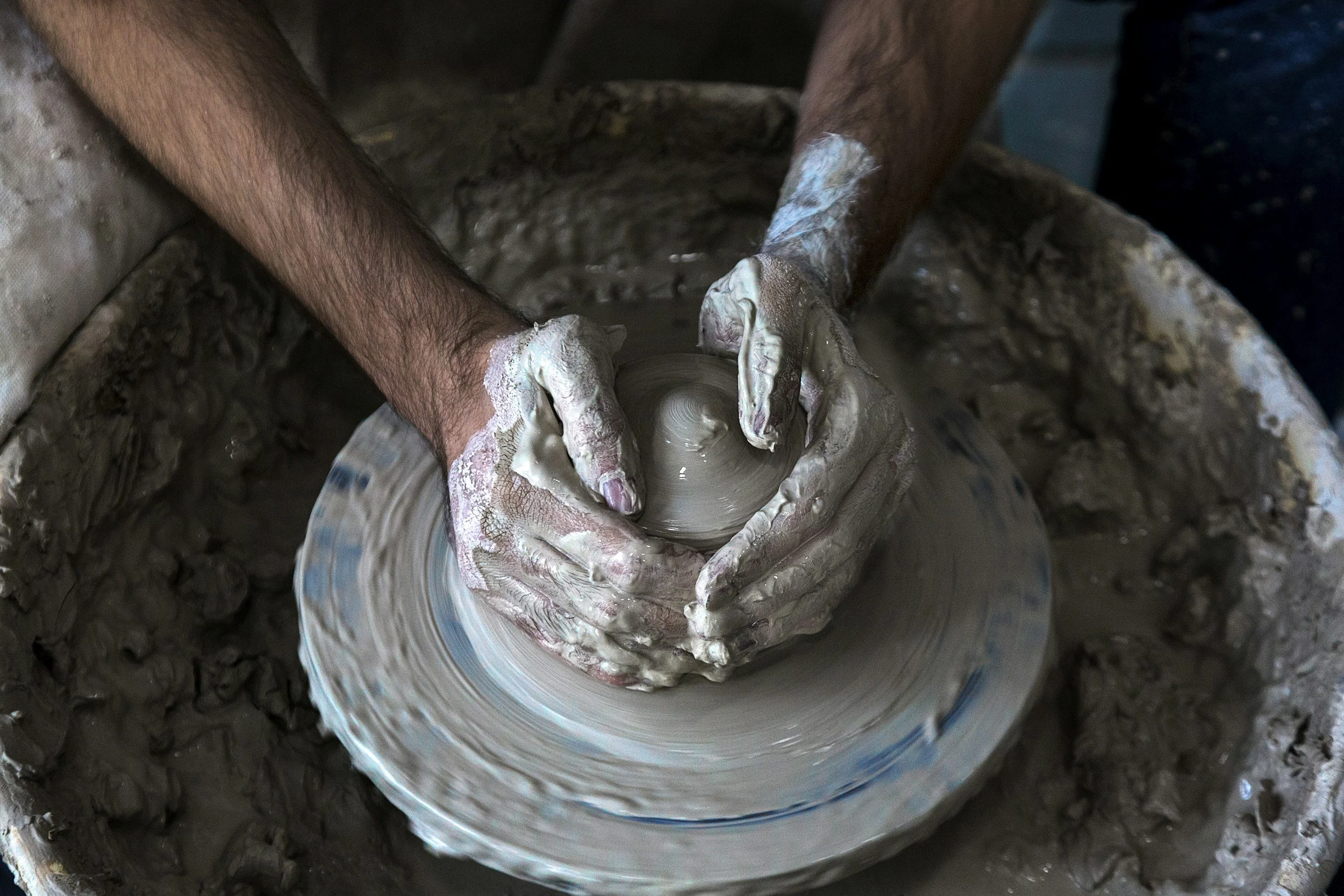
My son told me recently that he wants to learn to throw pottery on a wheel.
What struck me wasn't the wanting — it was the how he wanted it. He wasn't thinking about making things to keep or give away. He wasn't imagining a shelf of finished bowls or a set of mugs for the kitchen. He wanted to learn the process. He wanted to put his hands in wet clay and feel what happens when you apply pressure in exactly the right place, or the wrong one. He wanted to know the wheel.
I told him about a book called Centering by M.C. Richards — a poet and potter who spent years thinking about what it means to center clay. Her conclusion, roughly, was that you can't center clay without centering yourself first. The two acts are the same act. The wheel is just where that truth becomes impossible to ignore.
He got quiet in the way teenagers get quiet when something lands.
I've been thinking about that conversation ever since — about what it means to want a process rather than a product, and why that impulse, so natural in him at seventeen, becomes so difficult for so many of us to hold onto as adults. Especially those of us whose brains were never quite running the same software as everyone else.
A Loom, a Camera, and a Piece of Plain Cloth
There's a project I did in college that has never quite left me.
I wove a piece of plain cloth. Undyed cotton thread, nothing fancy, just a simple tabby weave — the most basic over-under structure there is, the same interlacing that humans have been doing with fiber for tens of thousands of years. While I was doing it, I had a friend follow me with a camera. She photographed everything: measuring out the warp threads on the warping board, counting them off, dressing the loom, threading the heddles one by one, sleying the reed, tying on. The first passes of the shuttle. The cloth slowly growing on the beam. The whole long, quiet process of making something from nothing but thread and time.
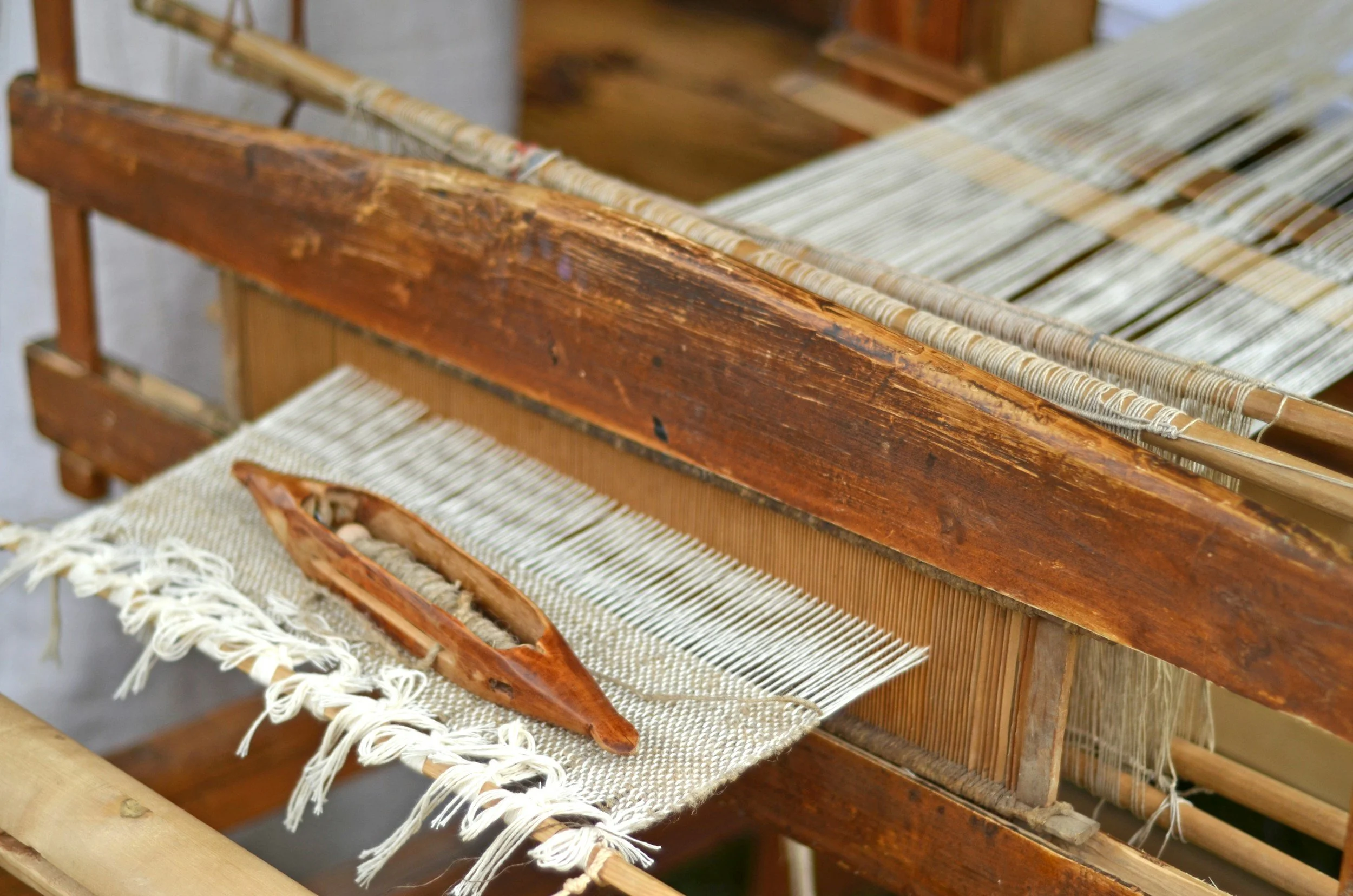
For the final presentation, I hung the finished cloth on the wall. And I projected the photographs of making it directly onto the cloth itself.
So you were looking at the object and the story of the object at the same time. The cloth held its own history. The process was visible inside the thing the process had made.
What I was trying to say with that piece — though I didn't have the language for it yet — was that the finished cloth and the making of the cloth were not two separate things. The object was only intelligible through its process. You couldn't understand what you were looking at without the story of how it came to be. And the story of how it came to be wasn't a footnote or a preface — it was the whole text.
I've spent most of my adult life, in various ways, trying to say that same thing.
What We Lose When We Skip the Process
Grief is a common experience that brings clients to therapy; however, in my practice, I often see a more unusual kind. It doesn't always announce itself as grief — it often arrives dressed as frustration, or self-criticism, or a vague, persistent sense of falling behind. But underneath it, when we look carefully, is the loss of something that was supposed to be there and isn't.
The creative life that never quite happened.
The women I work with — most of them neurodivergent, many of them navigating the particular upheaval of midlife — have things inside them that want to be made. A novel that's been living in the back of their mind for fifteen years. A quilting practice they started and abandoned three times. Paintings they dream about but never begin. A writing life that exists only in the notebooks they buy and then hesitate to write in, because what if they're not good enough, not ready, not the kind of person who does that.
They have ideas, so many delicious ideas. Neurodivergent brains are often idea-generating machines, making connections across unlikely domains, seeing patterns and possibilities that more linear thinkers miss entirely. The ideas are not the problem.
The problem is that the ideas never seem to be allowed to just be ideas in process. They need to become something. They need to justify their existence by eventually turning into a product, an output, an accomplishment that can be pointed to. And in the gap between "I have this idea" and "I have made this finished, successful thing," there is so much space for shame to move in.
The half-finished project becomes evidence of failure. The abandoned practice becomes proof that you can't follow through. The sketchbook you never filled becomes a document of your inadequacy rather than a record of your exploration.
And eventually, many women stop starting things. Because starting means risking that gap.
The Productivity Trap and the Neurodivergent Brain
Here's what I think is actually happening, underneath the self-blame.
Productivity culture is not a neutral system. It was built around a certain kind of linear, sequential cognition. Start a thing, work on it steadily, finish the thing, move to the next thing. Rinse and repeat. Show your work in progress reports. Meet your deadlines. Accumulate your finished bowls.
For brains that don't work that way (I’m talking about neurodivergent brains) this system isn't just difficult. It's actively harmful. Because it doesn't just make you less productive by its own metrics. It makes you believe that your way of making is defective.
The intense hyperfocus that pours everything into a project for three days and then needs to surface and breathe? Defective.
The pattern of circling back to an idea from five different angles before it coheres into something? Defective.
The need for long, unstructured time to just play with the material, to feel it, to let it teach you what it wants to become? Definitely defective. That's not work. That's procrastination.
Except it isn't. It's process. And for many of us, it's the only process that works.
Neurodivergent brains are, in my experience, often extraordinarily process-oriented. Hyperfocused on the how of a thing. Deeply interested in systems, textures, and the felt experience of understanding something from the inside. This is not a flaw waiting to be corrected. It is a profound orientation toward making that, in the right conditions, produces extraordinary things.
M.C. Richards knew something about this. Her whole argument in Centering is that the potter's relationship to the clay is not about efficiently producing an object. It's about entering into a relationship with a material, with a process, with yourself. You can't rush it. You can't outsource the learning. You have to be there, hands in, fully present, willing to fail, willing to start over, willing to be a beginner indefinitely.
That is not a productivity model. It is something much older and much more honest.
The Unfinished Thing Is Not Evidence Against You
I want to say something directly to anyone reading this who has a drawer of abandoned projects, a graveyard of good intentions, a list of things you were going to make that you still haven't made.
Those unfinished things are not evidence of your inadequacy. They are evidence of your aliveness. Of your interest in the world. Of your capacity to be drawn toward making something, which is actually a profound human impulse and not a given.
We have been trained to look at the pile of unfinished things and see a character flaw. I want to invite you to look again and see the evidence of a creative mind that keeps trying to find its way into making.
The cloth was never the point. The weaving was the point.
What Process Actually Feels Like
When we let ourselves be in process genuinely, without the hovering demand that we produce something worthwhile, something shifts in the body. I see it in my clients. I feel it in myself when I'm at my sewing machine, or when I pick up my embroidery, or when I'm writing something that nobody asked for.
There's a quality of absorption that arrives. Time changes shape. The inner critic, that exhausting constant companion, gets quieter. We're not trying to be impressive. We're not trying to finish. We're just here, making.
This is, among other things, a somatic experience. The nervous system, which so often runs hot in neurodivergent women — particularly in the perimenopausal years when everything is amplified — tends to settle when the hands are occupied with something real, something textured, something that requires just enough attention to be absorbing without demanding the kind of focused cognitive output that depletes us.
The therapist-researcher Bessel van der Kolk writes about how trauma lives in the body and how creative and somatic practices can reach places that talk therapy cannot. I have seen this to be true, over and over, in the women I work with.
The clay, the thread, and the page are not decorative add-ons to healing. They are, for many people, the path.
M.C. Richards was onto something.
Coming Home to Your Own Making
In midlife, especially for women who received a late diagnosis of ADHD or autism, who spent decades adapting themselves to systems that were never built for them, there is often a profound reckoning with identity. Who was I before I learned to perform competence? What did I actually love, before I learned to love what was practical?
For many women, the honest answer involves making something with their hands. Sewing. Knitting. Pottery. Drawing. Writing. Growing things. Some creative practice that they abandoned, or never allowed themselves to begin, or kept at the margins of a life where there was always something more urgent.
Reclaiming that practice is not a luxury. It is not self-indulgence. It is, I would argue, a necessary part of coming home to yourself, of finding, beneath the survival persona, the performed competence, and the exhaustion, the person who was always there, who always wanted to make things, who was always drawn toward process.
You don't have to make anything ‘good’. You don't have to finish. You just have to begin, stay a little longer than feels comfortable, and notice what happens.
One Small Way In
If something here is stirring in you, here's an invitation: pick up the material that has always called to you and give yourself twenty minutes with it this week.
Not to make anything. Not to finish anything. Not to produce something you could show anyone.
Just to feel what it's like to be inside the process. Notice what happens in your body when your hands are doing something they've wanted to do. Notice what quiets, and what wakes up. Notice whether time moves differently.
That's it. That's the whole practice.
My son is going to put his hands in clay and learn to center it, and for a while, the bowls are going to collapse, and that is going to be the point entirely. I think he already knows this. Some of us knew it once and had to learn it again.
The centering is the point. It was always the point.
An Invitation to Make Together
If you want to explore the process in the company of others, I have two ways to do that with me this month.
The first is Mindful Making — a monthly creative sanctuary gathering at the museum, coming up on Sunday, March 22nd. Bring whatever you're working on, or come with nothing at all. We make together, we breathe, we let the doing be enough.
The second is The Writing Cocoon — a weekly online writing group for women who want to write, not perform. We don't workshop for publication or chase the perfect sentence. We write together, we witness each other, and we treat the writing itself as the destination rather than the path to somewhere else.
Both spaces are built on the same premise as that piece of cloth: that the process is the whole thing, and that doing it in community makes it more possible, more sustaining, and more real.
The Writing Cocoon's next free session is on the spring equinox, March 21st. Save your spot here!
If either of these feels like something, I'd love to make alongside you.